
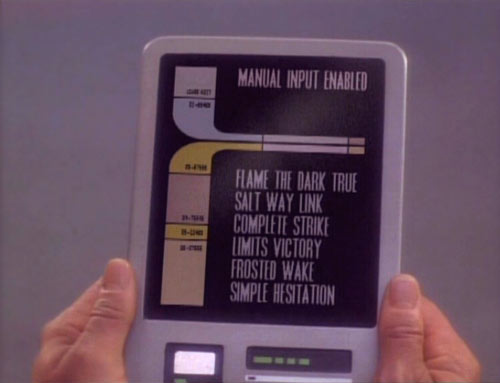
It’s pretty clear that the creators of Star Trek anticipated the tablet computer. The tablet of their future was referred to generically as the personal access display device, or PADD, and was interchangeable to the extreme. Some scenes even depicted starfleet officers delivering each other orders by simply handing one PADD to the other. Perhaps this had something to do with the elimination of currency in the future. No currency, no brands. Anyway…
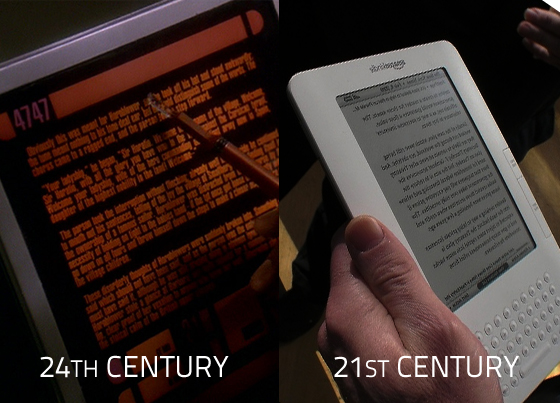
What I find fascinating is that the creators of this science fiction series were imagining a distant, utopic future. My favorite entry in the Star Trek saga was The Next Generation, which depicted the Enterprise crew of the 24th century–300 years from now. They had all kinds of fantastic advances- interstellar ships, contact with diverse alien species, advanced medical technology, food and goods replicators- but still had what have proven to be fairly un-advanced personal computers. Imagine the technological reality of 300 years in the past from today (circa 1710), the beginning of the industrial revolution, which began with the invention of the piano, the steam engine, and the thermometer. How radically things have changed since then! Inventors of that mechanical era could have hardly imagined the miniaturization of technology that we enjoy today. Likewise, we are unlikely to realistically imagine the technology of 300 years ahead. As the popular anticipation of forthcoming tablet devices grows (particularly Apple’s), it’s clear that while we may imagine the tools correctly, we get the dates very wrong.
Related Posts
-


Christopher Butler will be a keynote speaker at the 2015 ConvergeSE conference...
-


Chris Butler will be speaking at the concluding session of the AIGA's Web101 course...
-
Chris Butler is MC'ing at this year's Hopscotch Design Festival...